A major development in in the world of Polyhedra came in 1966 when Norman Johnson published a long list of solids now known as the Johnson Solids. These go beyond the uniform polyhedra – the Regular (Platonic) ones, the Semi-Regular (Archimedean) ones, and the Prisms – by breaking one of the rules. Uniformity says the configuration round every vertex has to be the same: you can’t, for instance, have square-square-triangle at one vertex and then triangle-triangle-pentagon at another. But everyone knew other solids could be made, often by ‘getting it wrong’ when putting a solid together – indeed children’s toys often demonstrated this. So was this worth investingating? Johnson’s contribution was to ask if we ignore the uniformity rule, then just how many shapes do we get; is there any structure to them; and what can we learn from it all?
It turns out there are an amazing 92 Johnson Solids, and they’re almost all mis-assemblies of the solids that we already know. There are catalogues of them at the Wikipedia page on Johnson Solids and the Wolfram page on Johnson Solids, but here are photographs of the part-collection that I’ve got round to making.
Card is useful of course, but ‘toys’ like the Early Learning Centre’s Polydrons really come into their own here. And Johnson’s ideas on naming them are something else again!
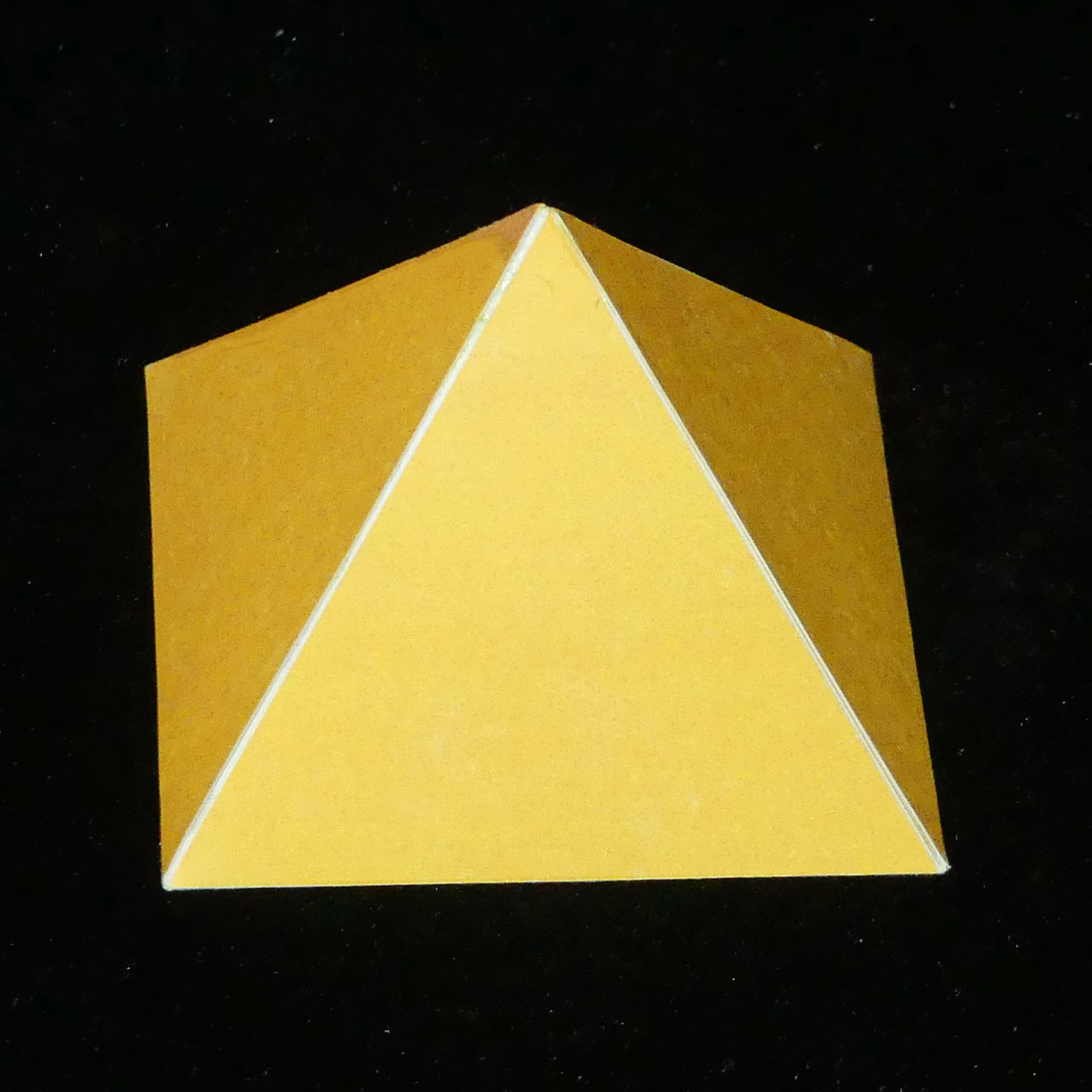
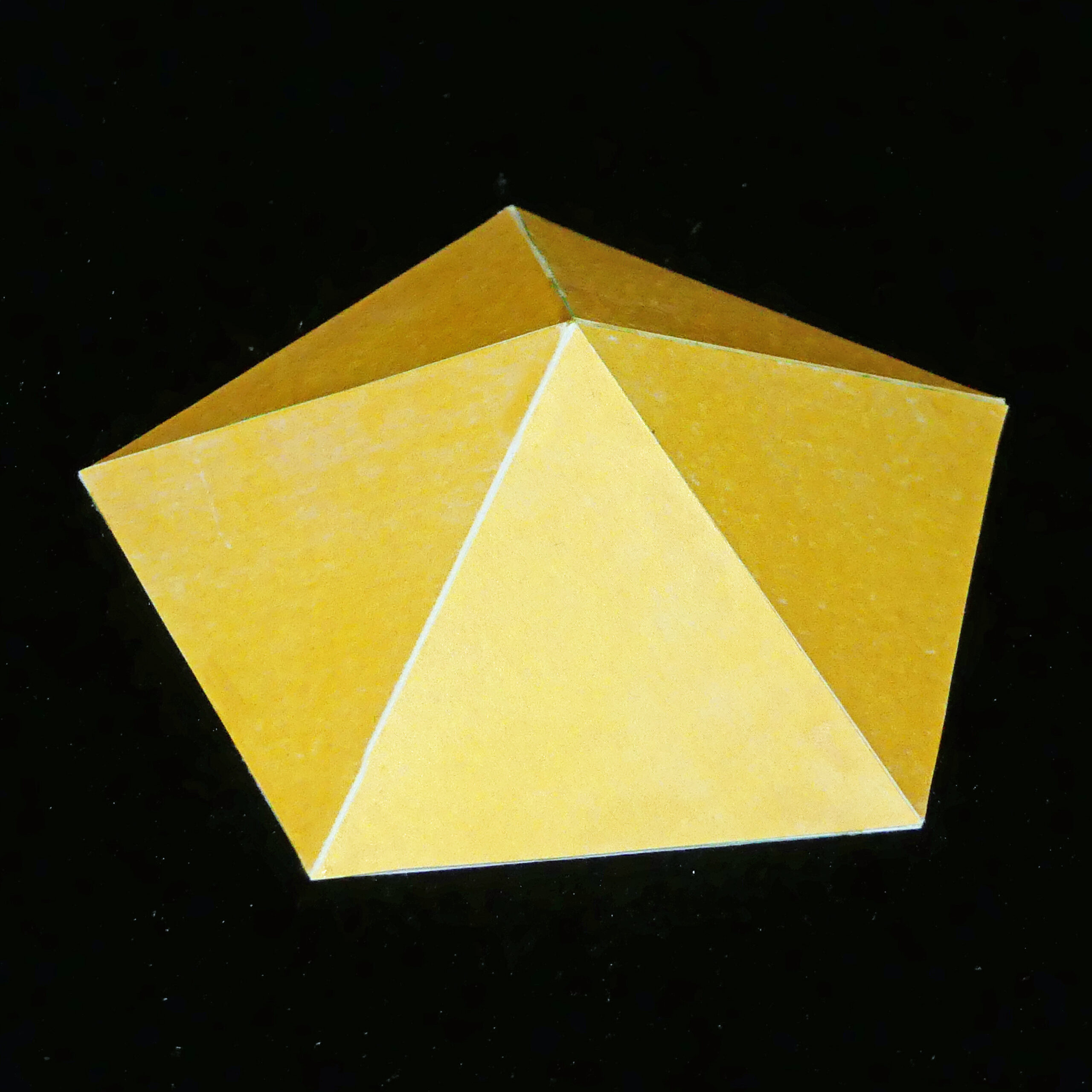
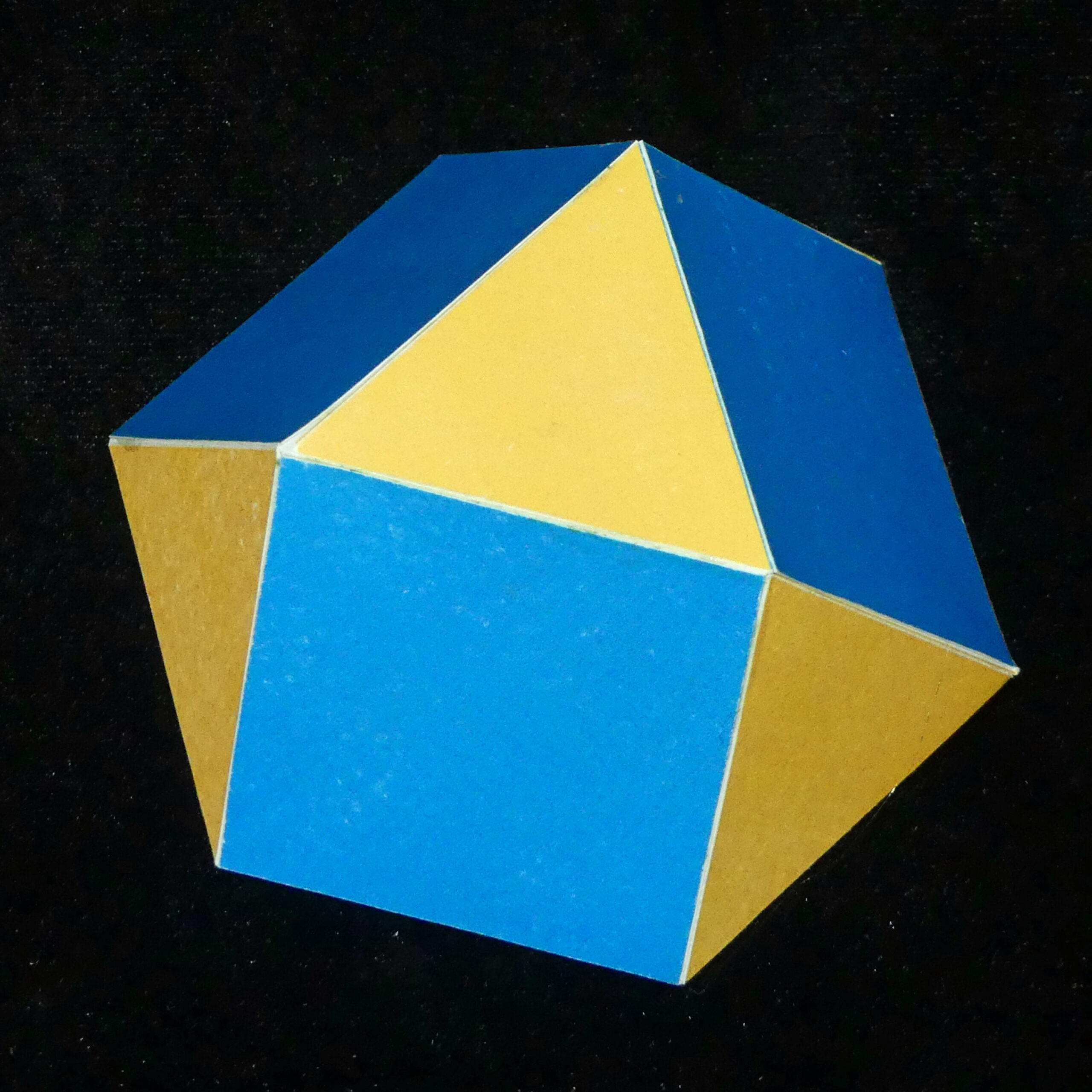
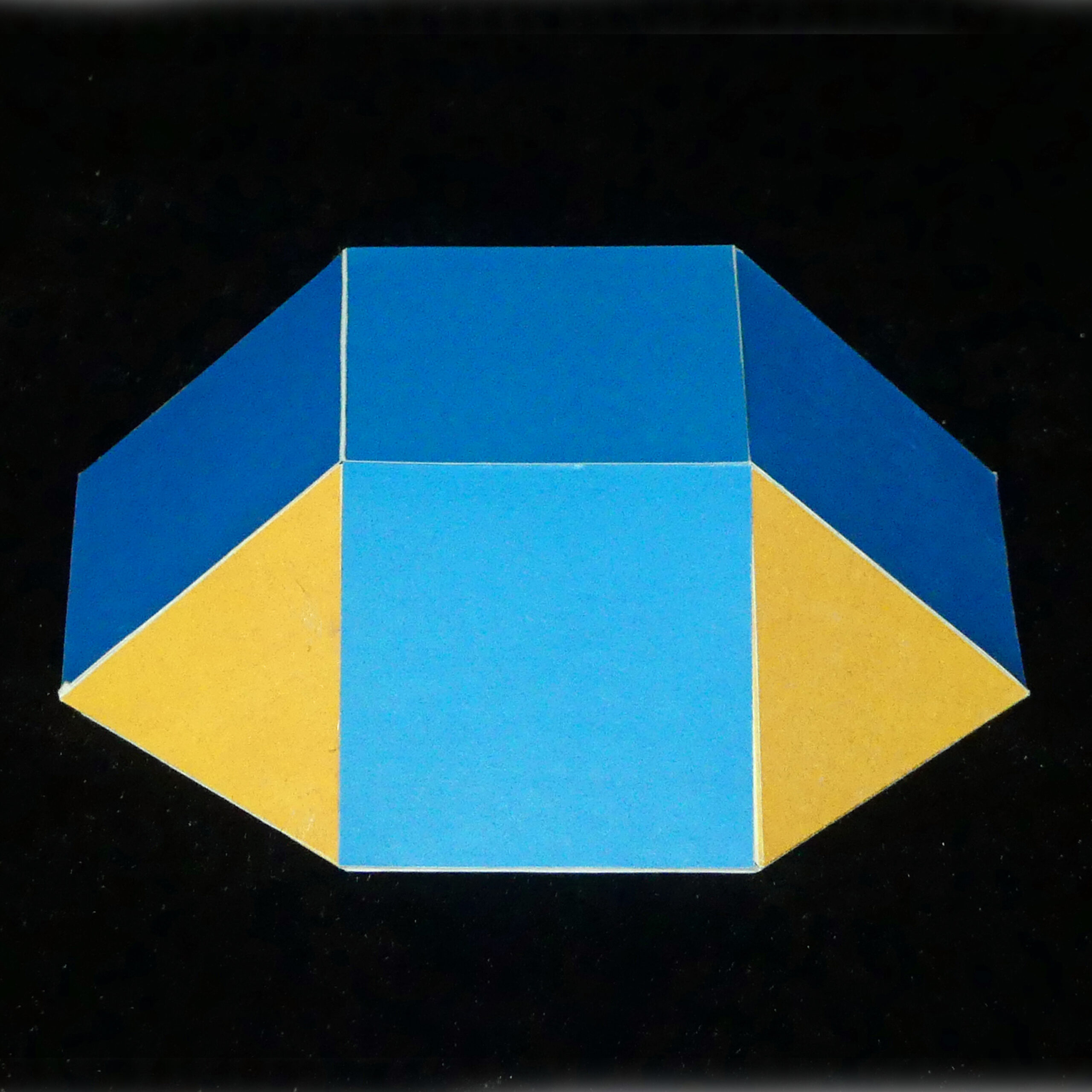
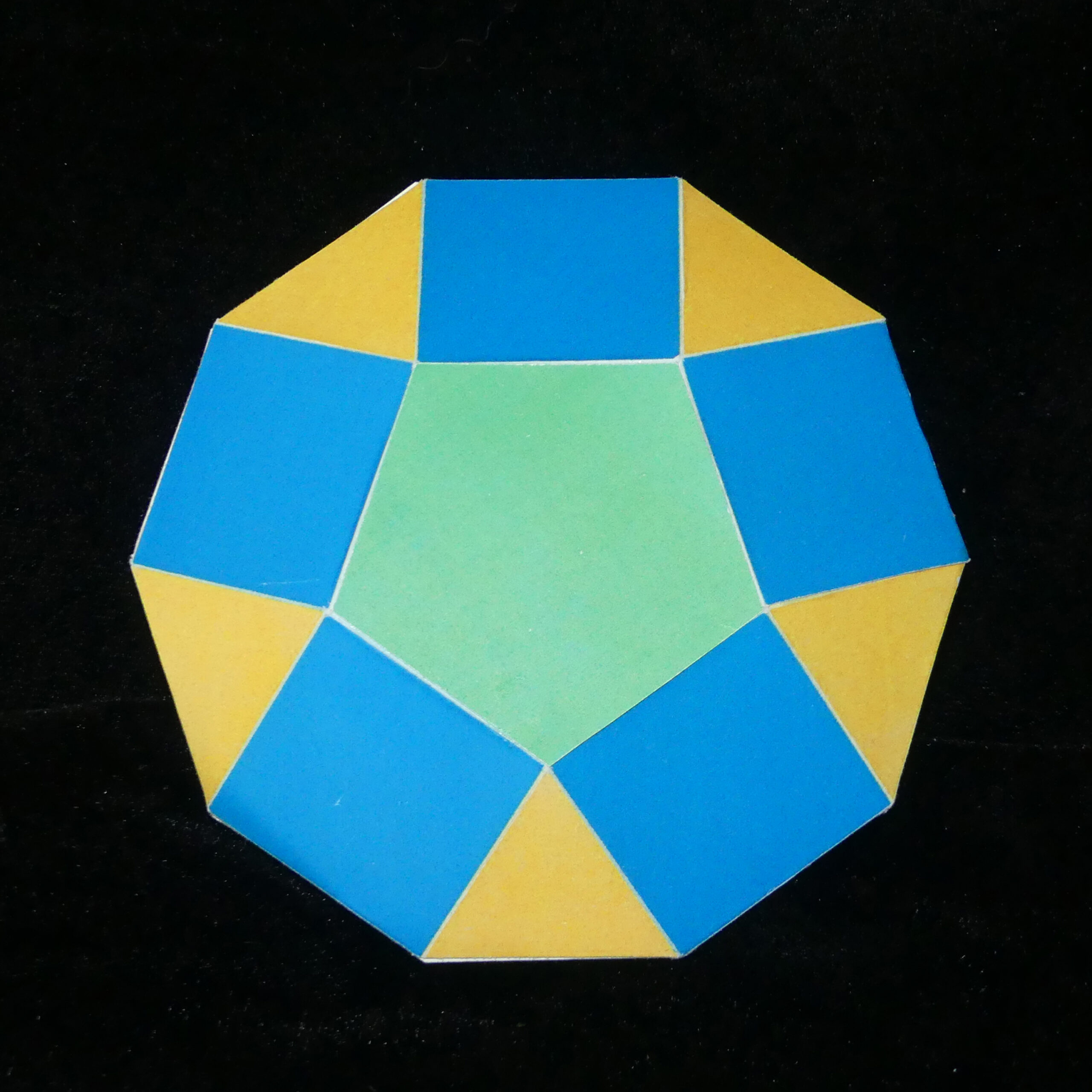
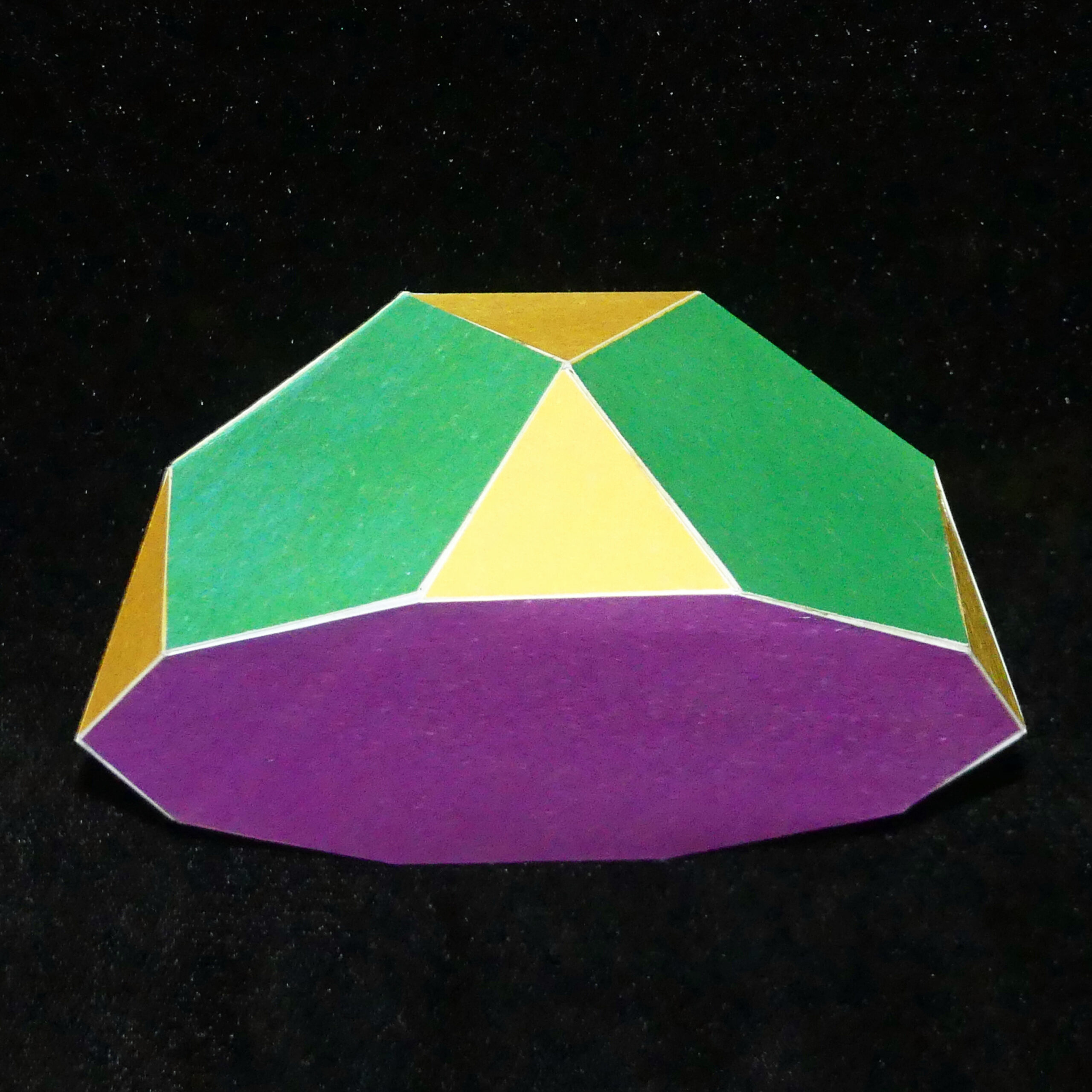
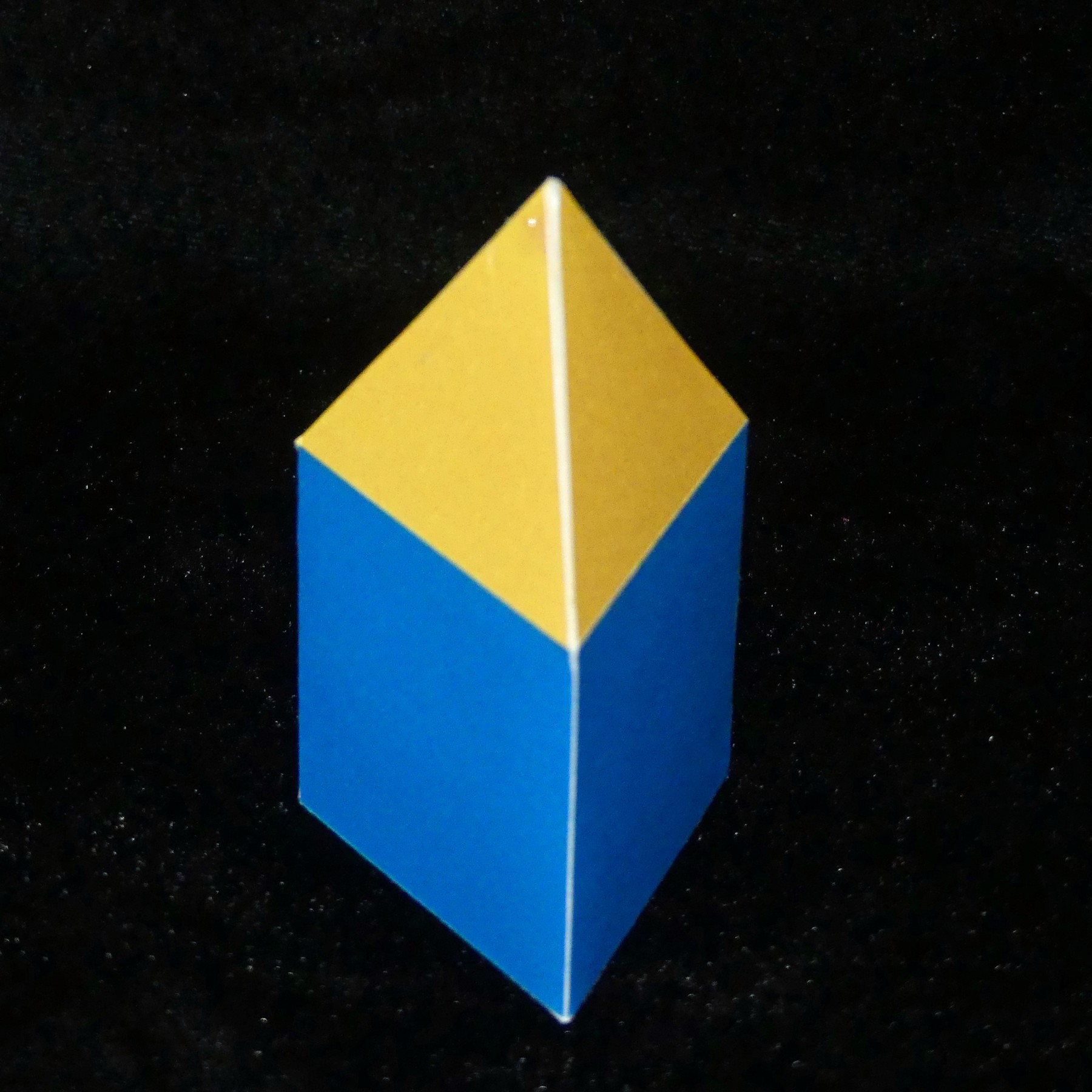
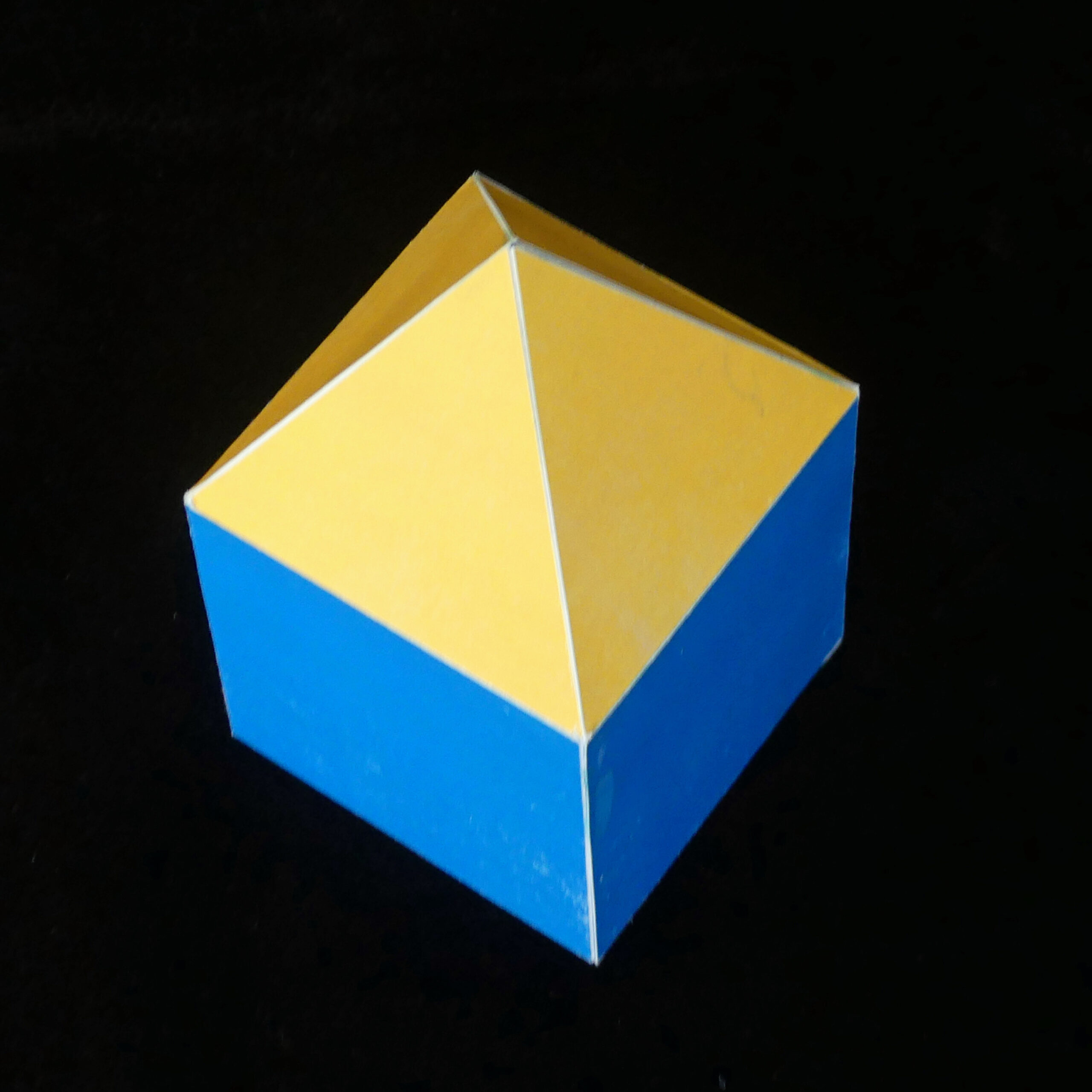
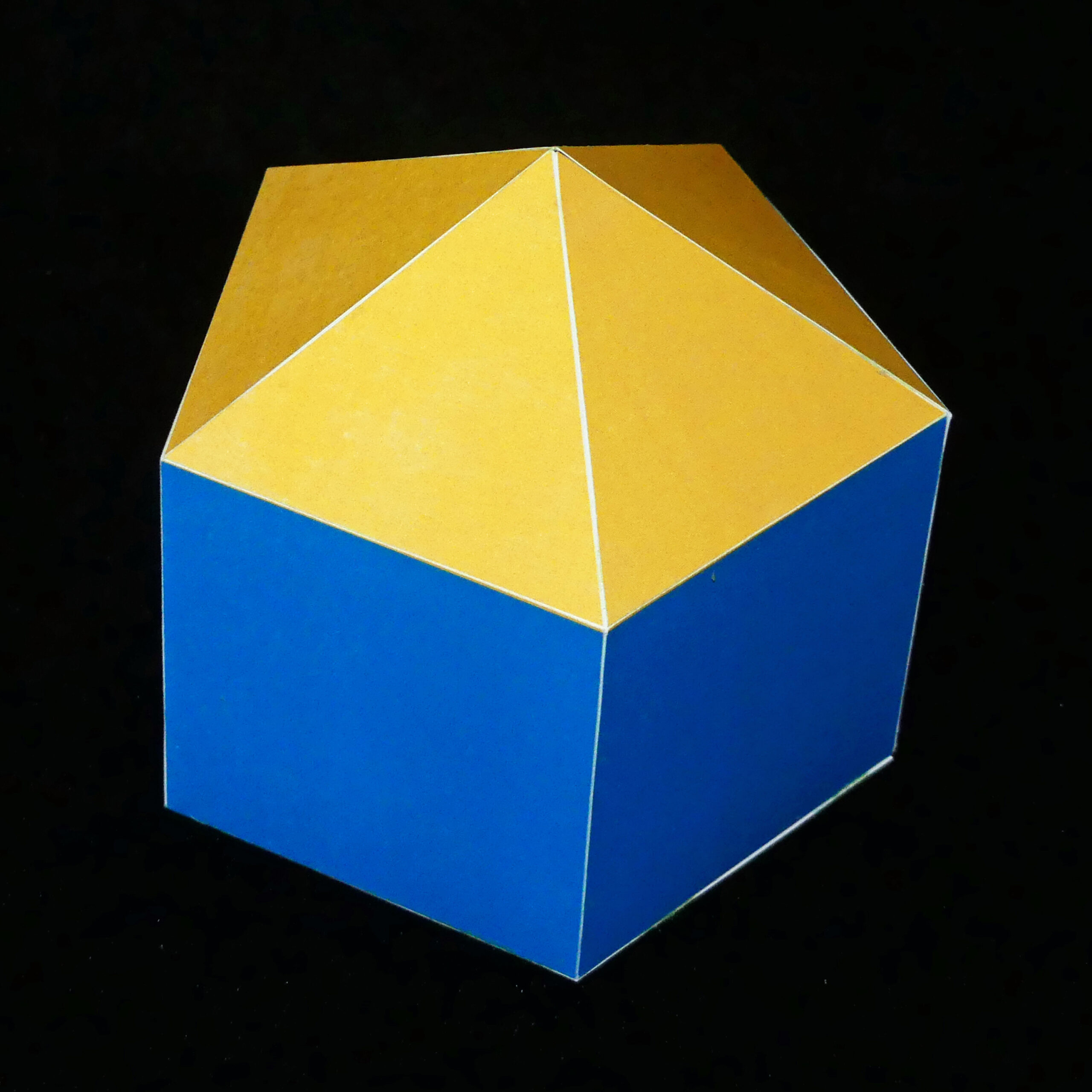
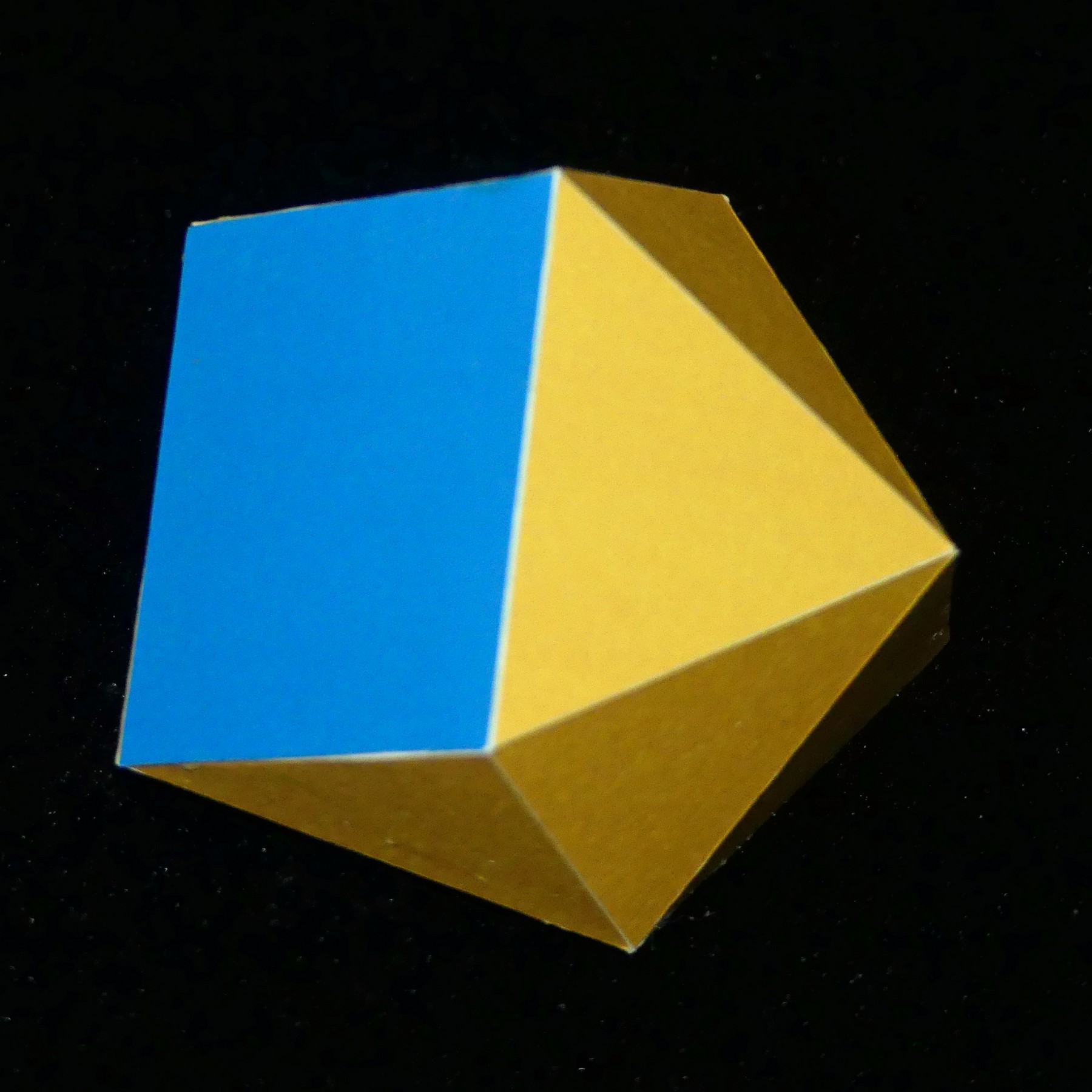
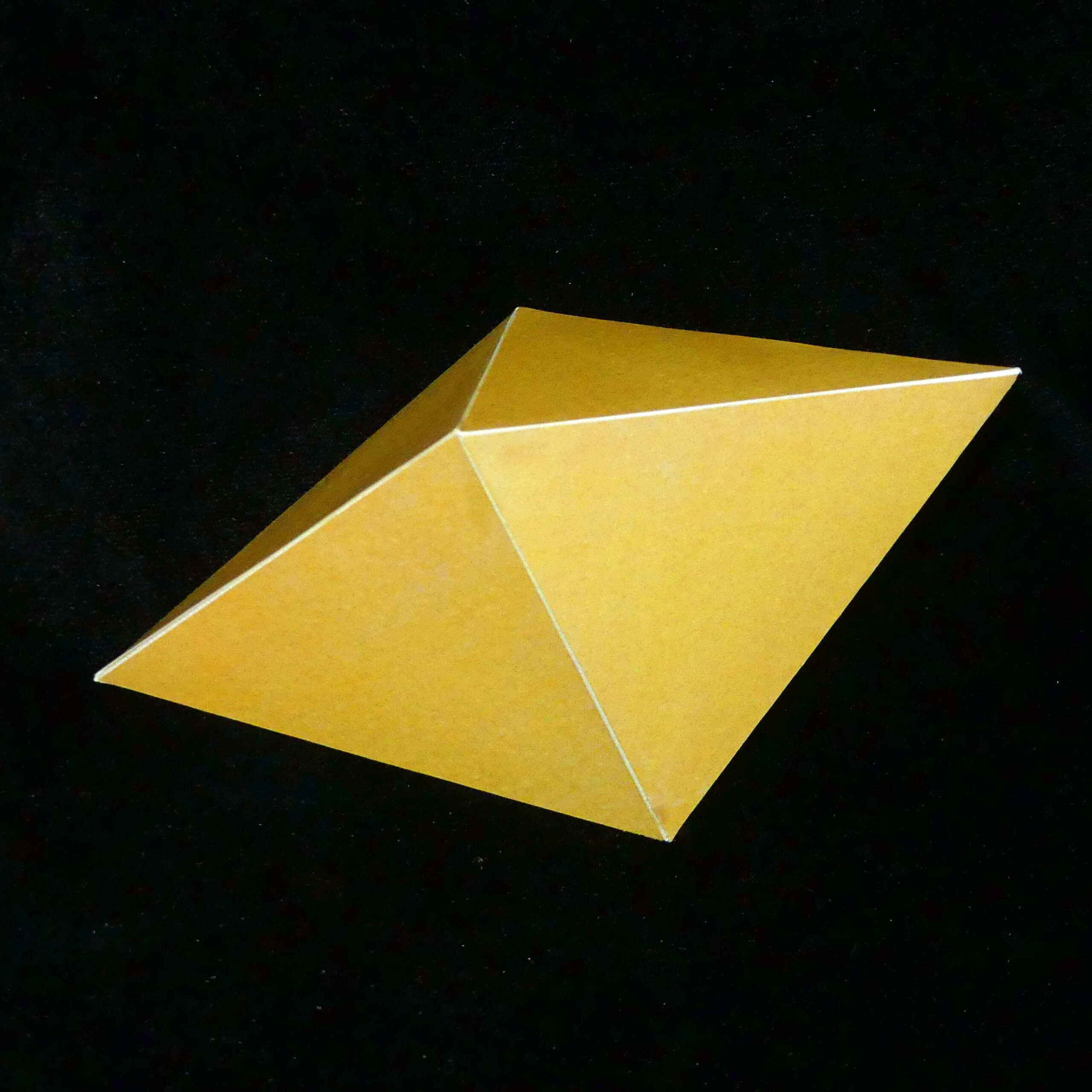
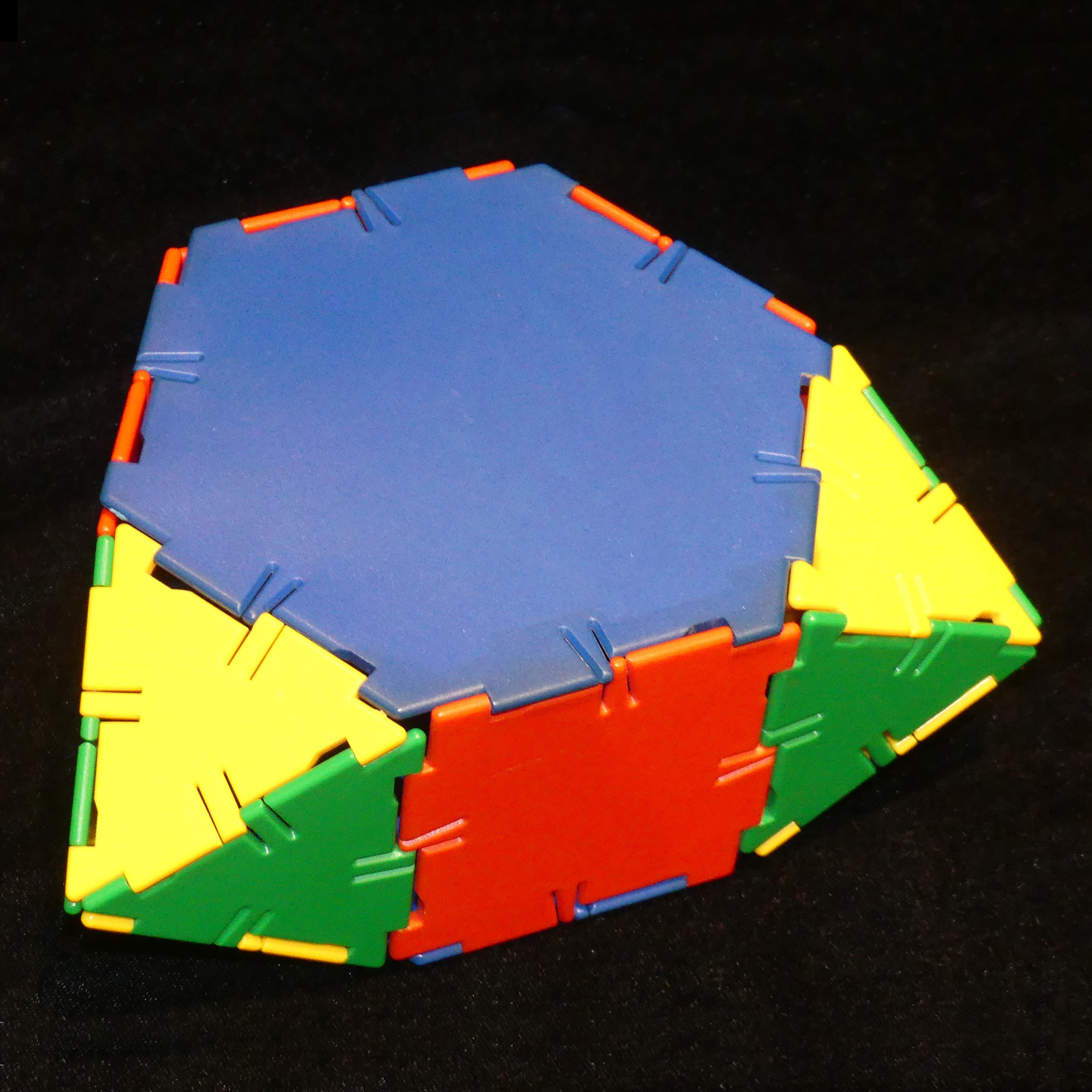
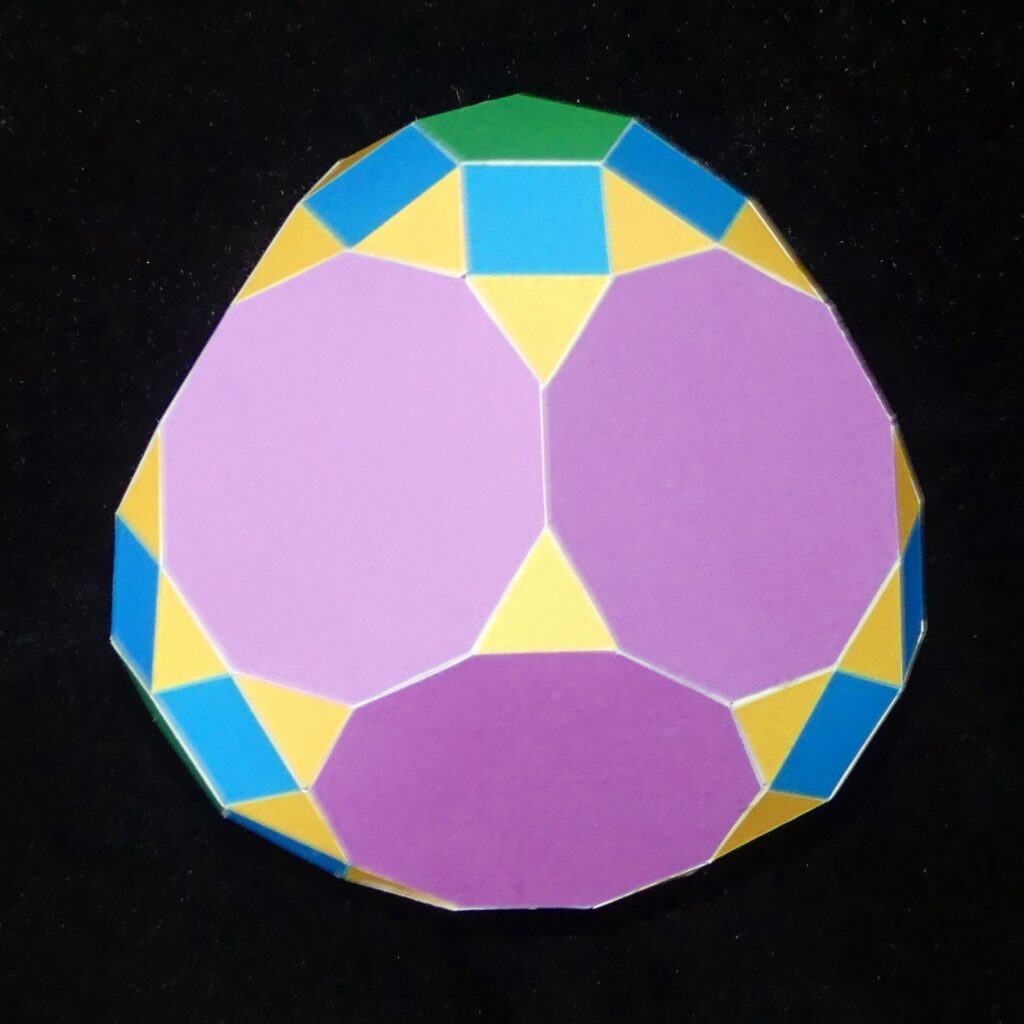
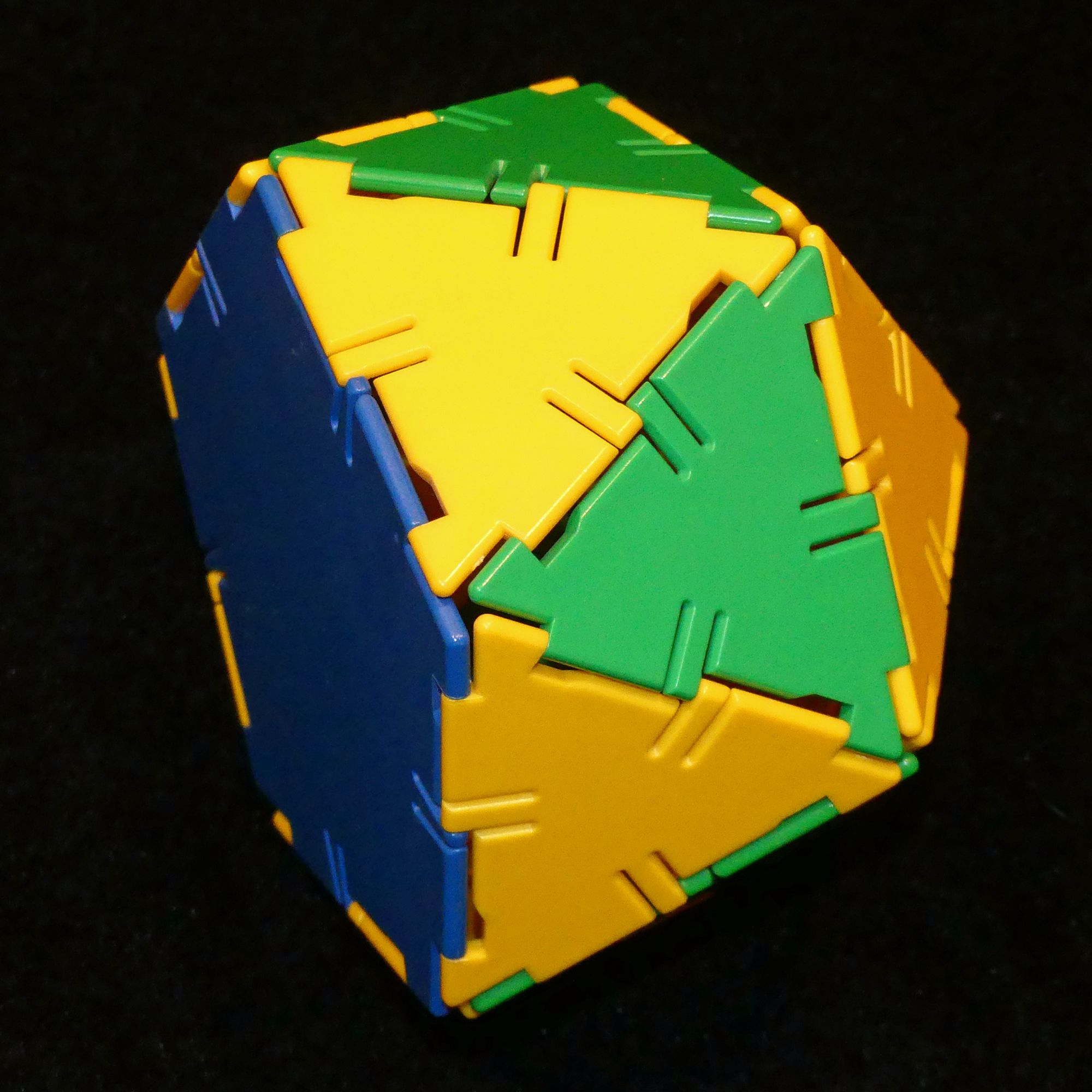
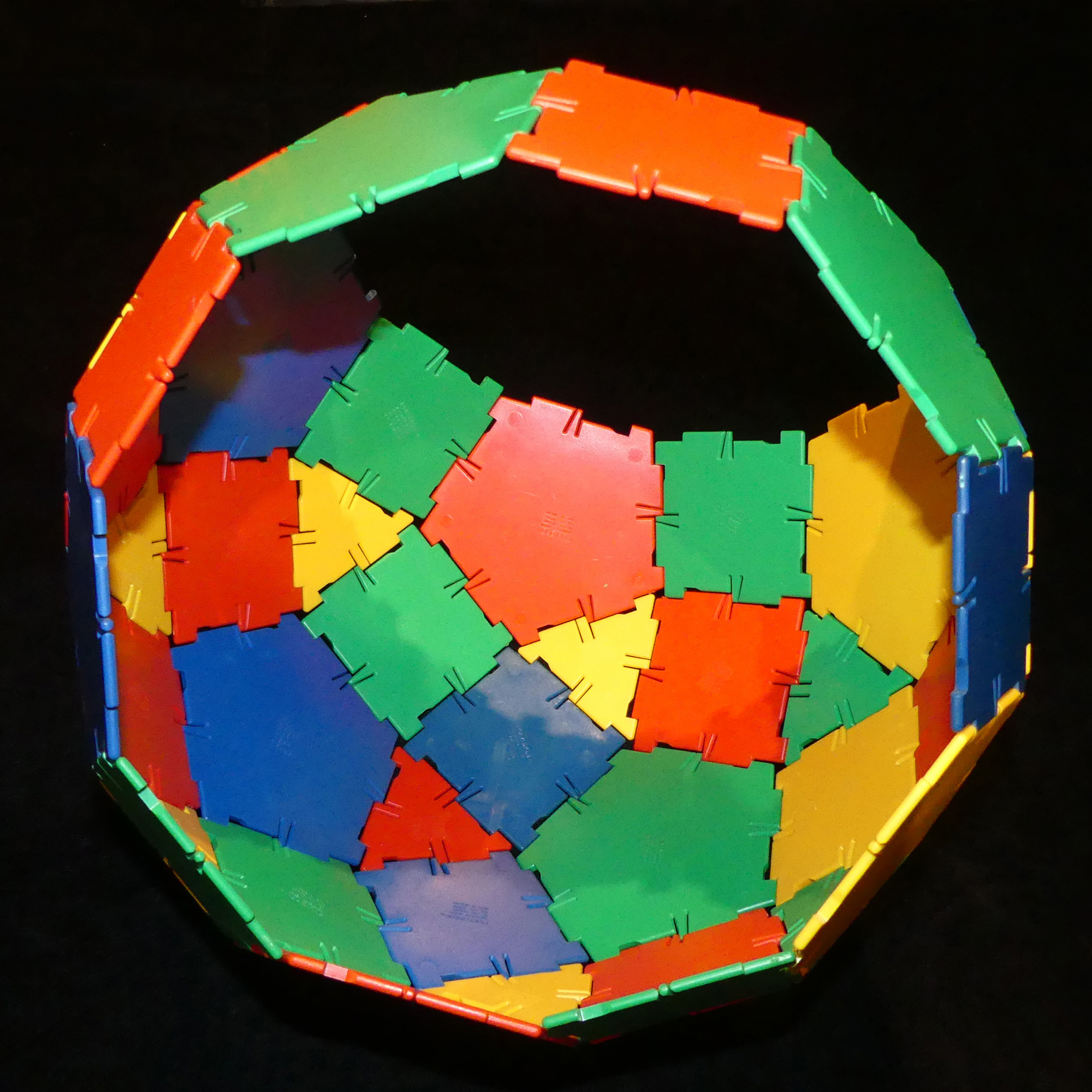
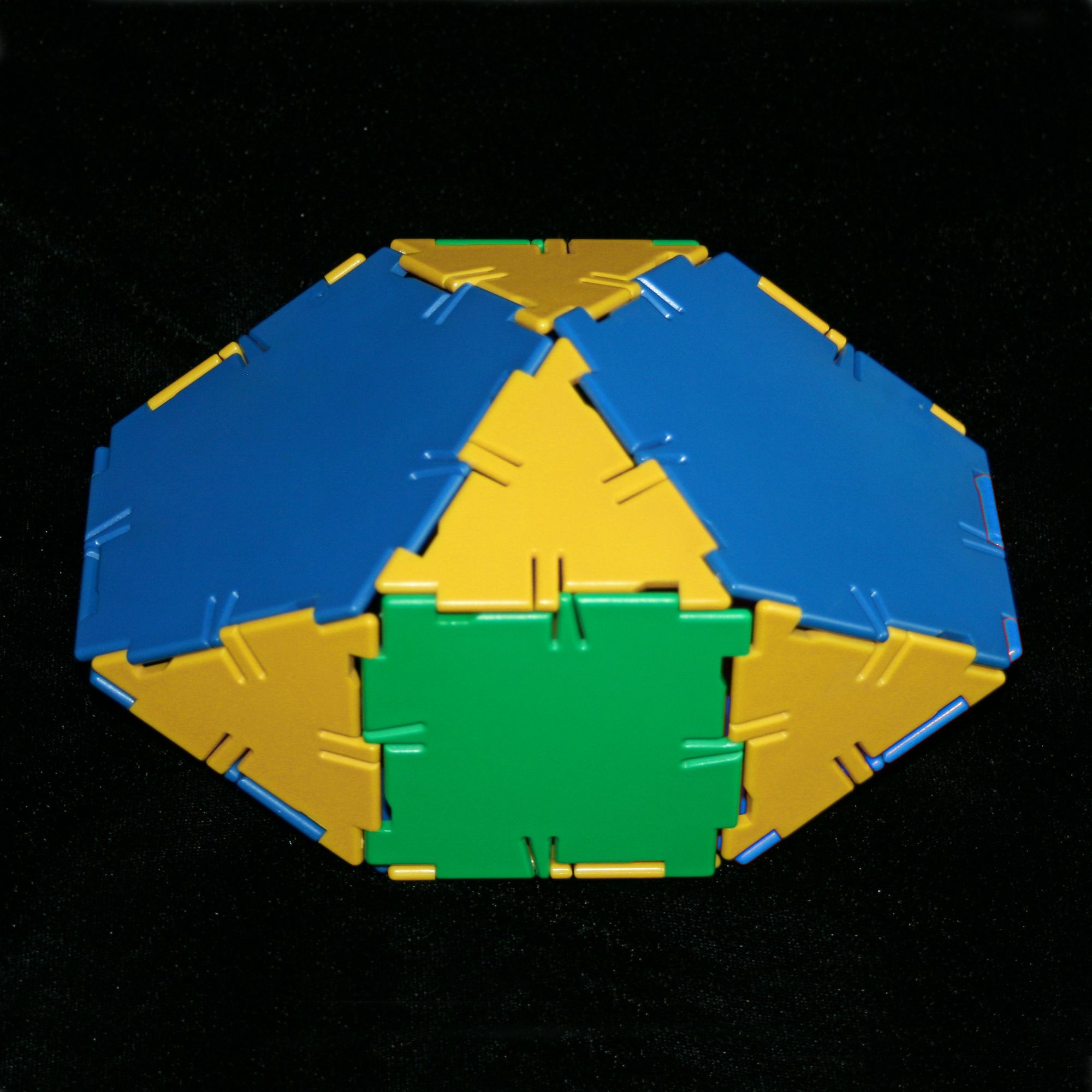
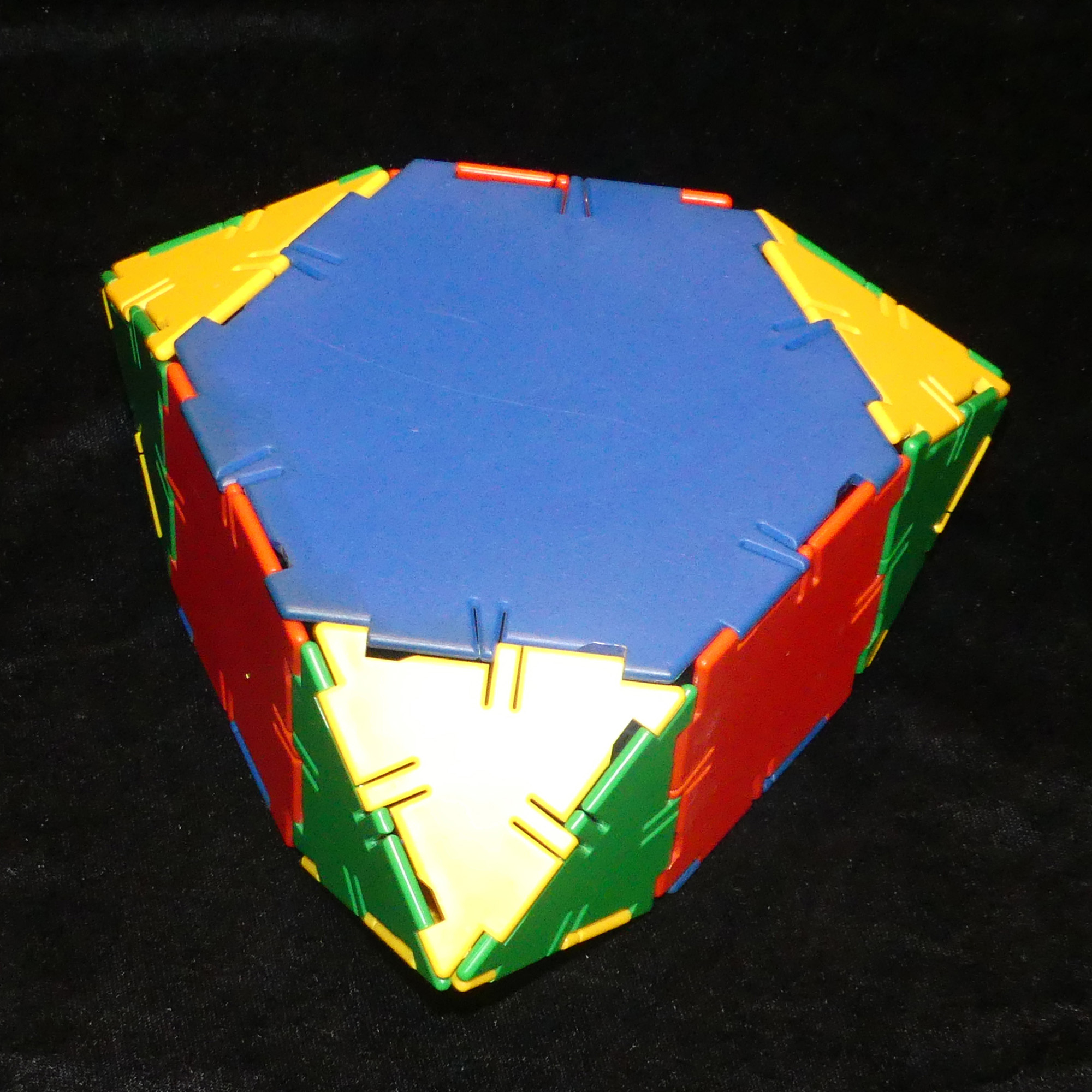
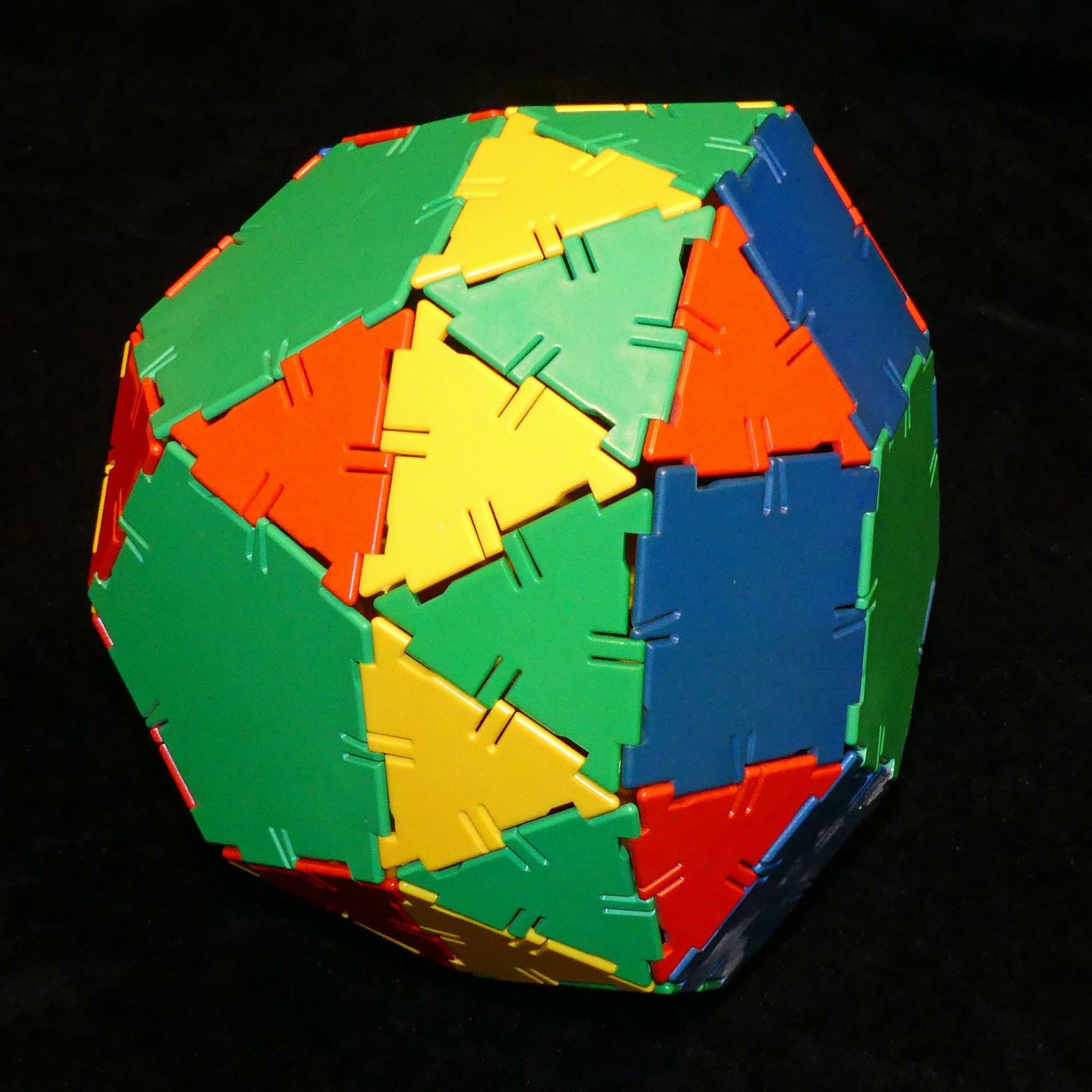
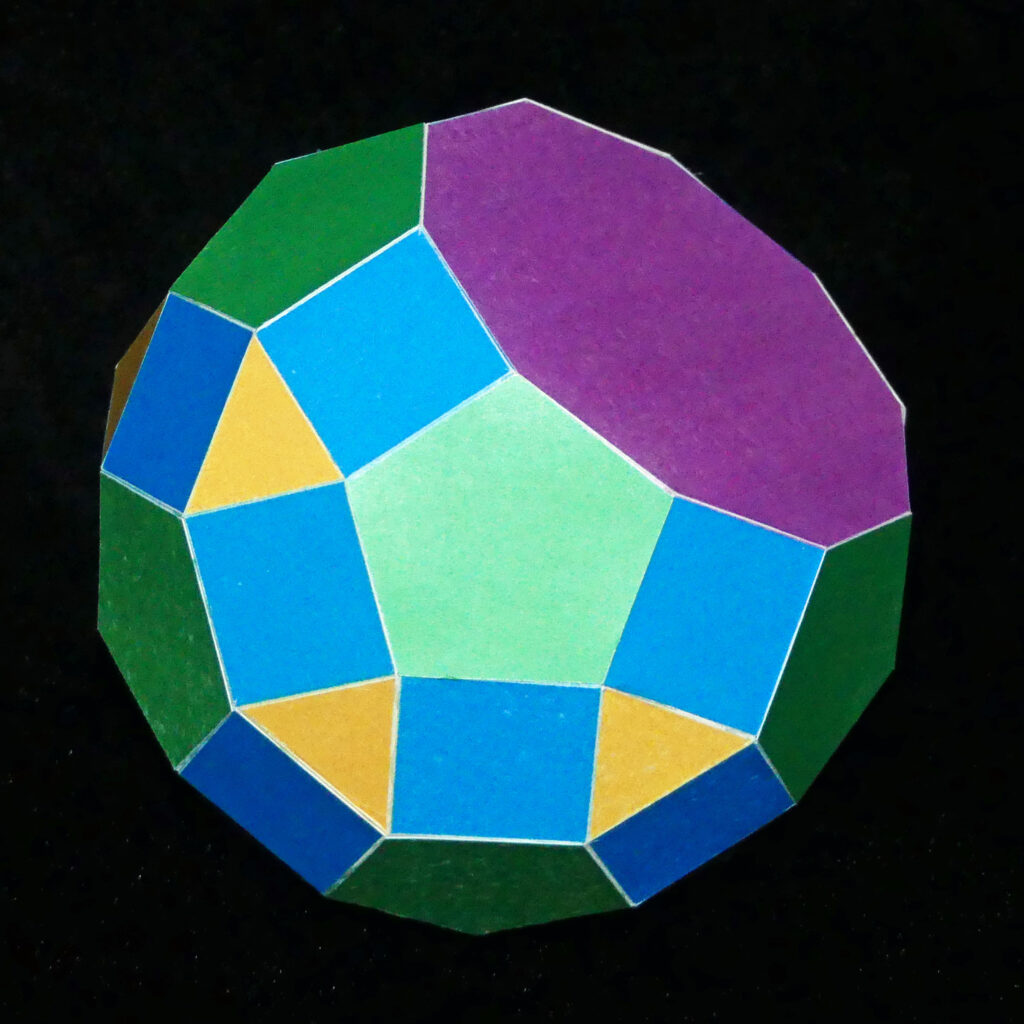
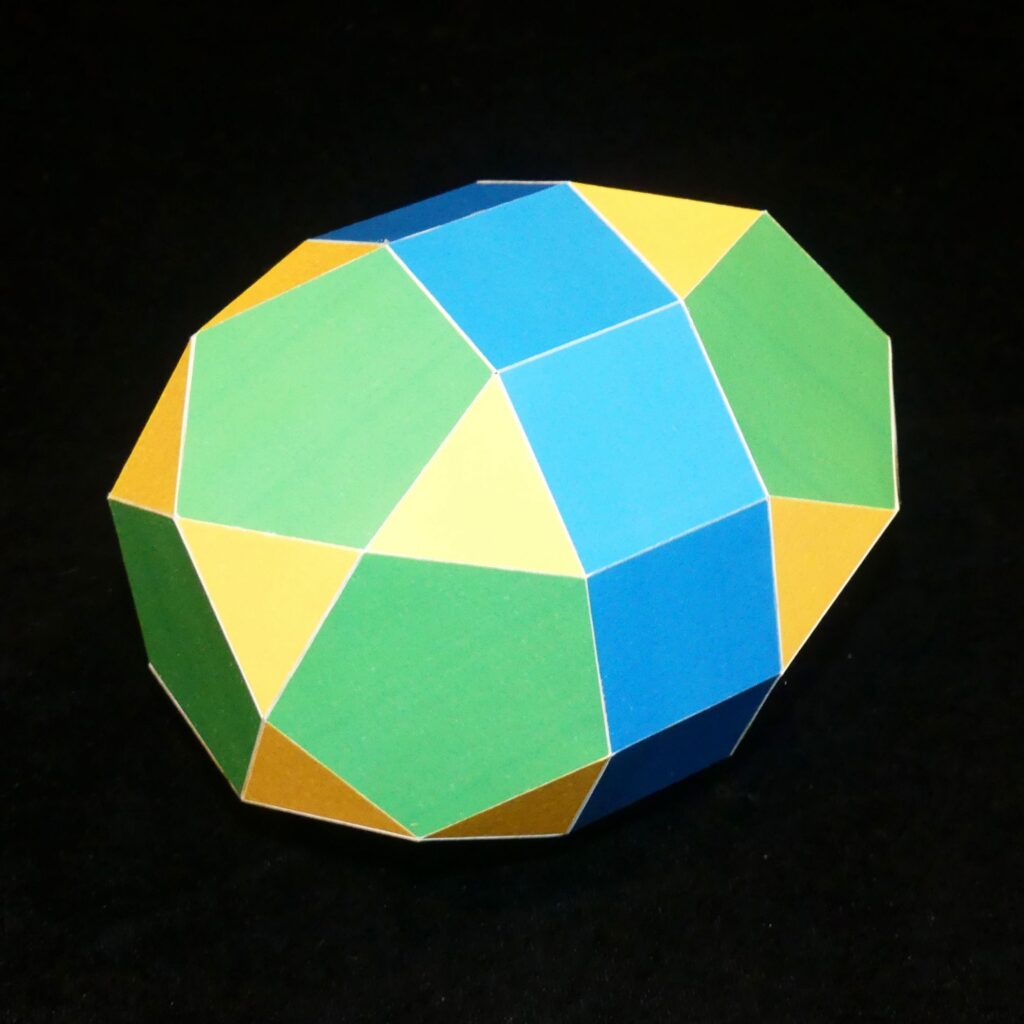
Gyrobirotunda
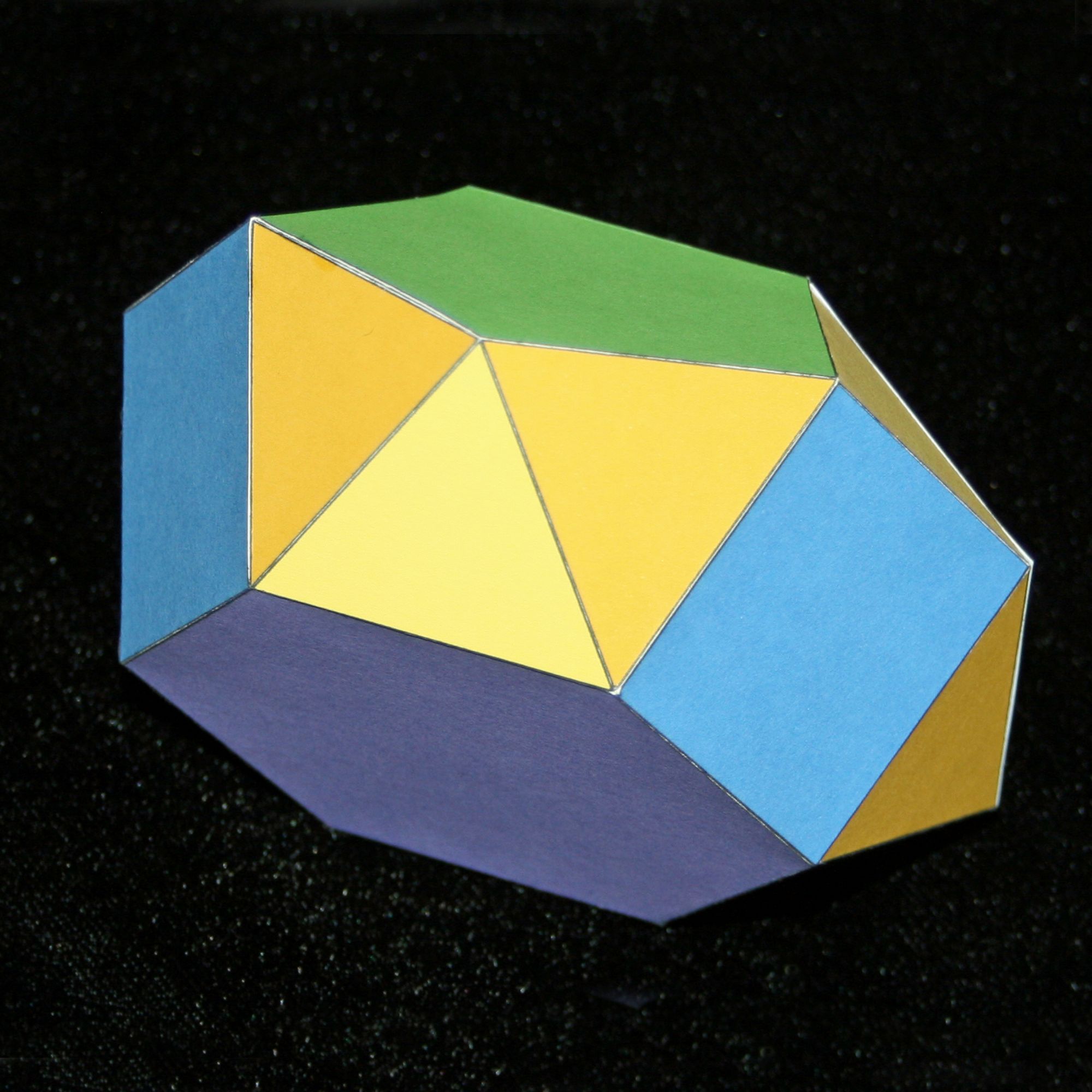
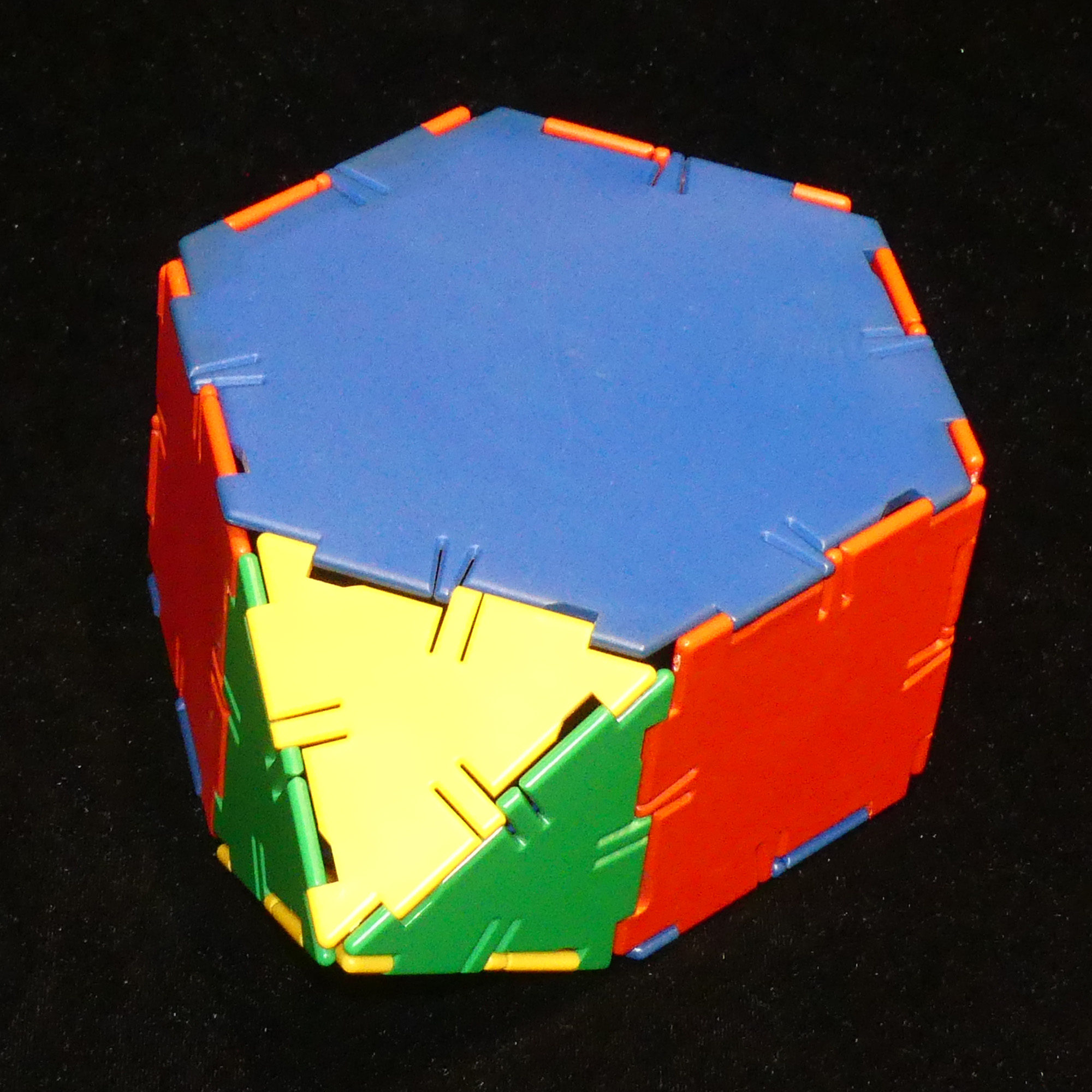
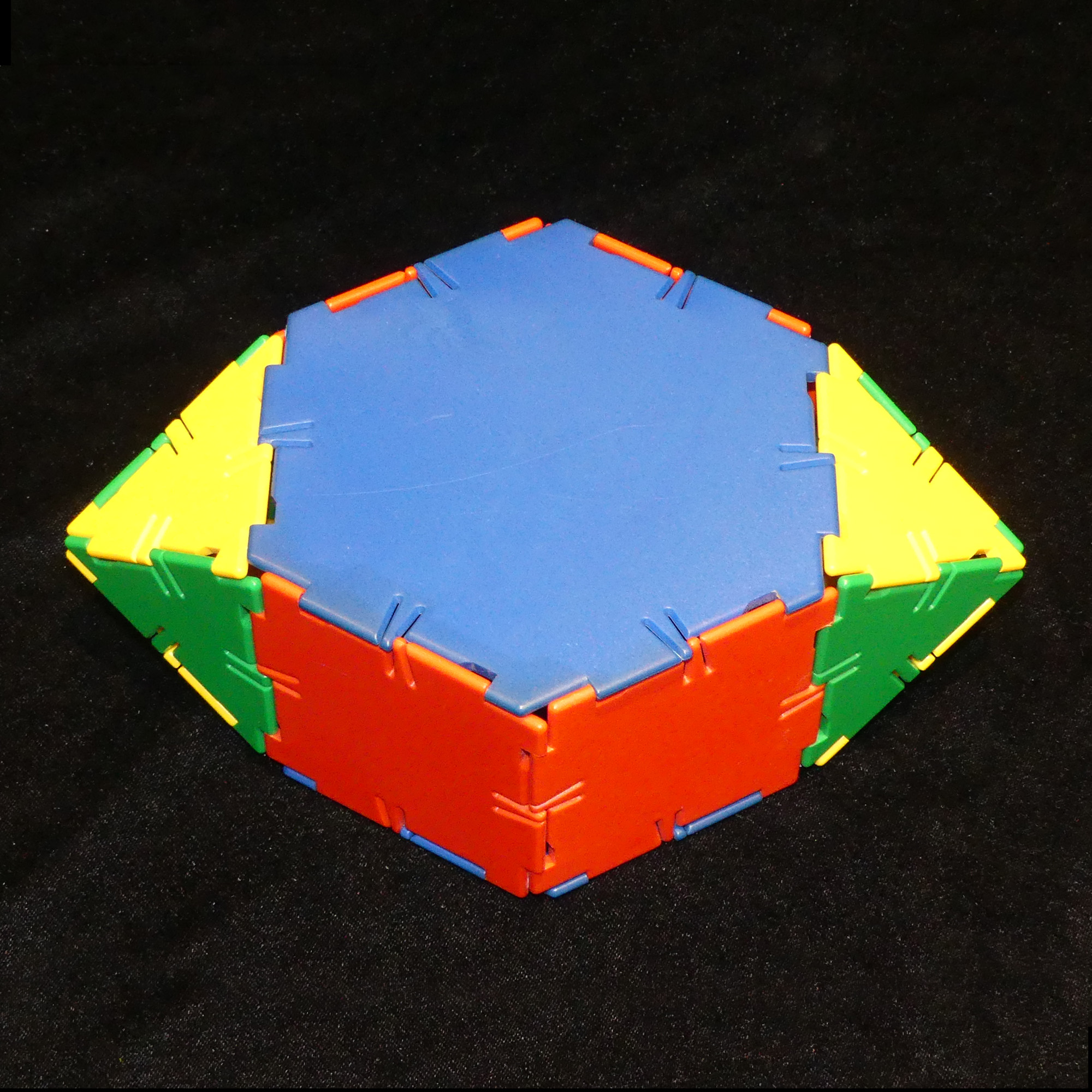
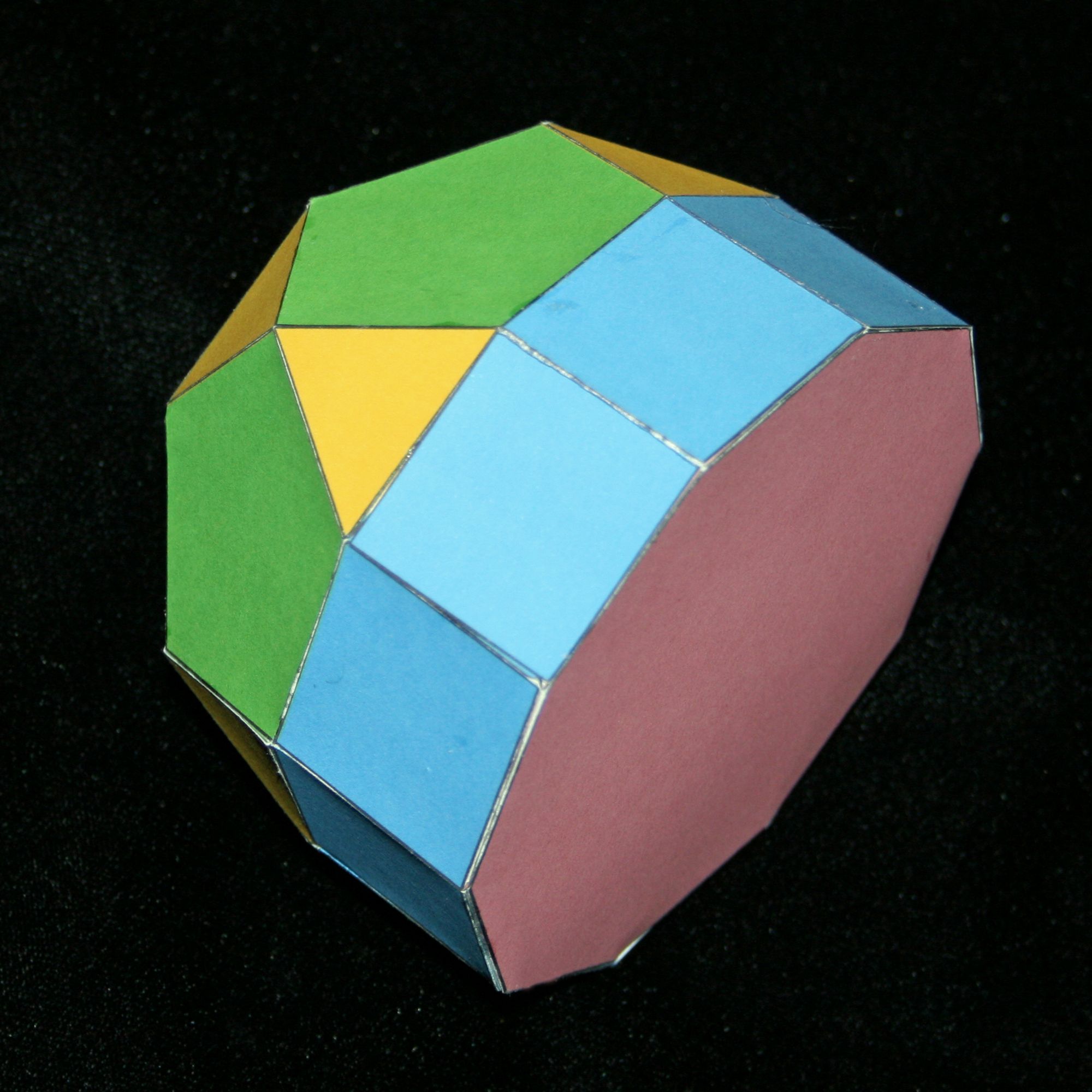
There’s a full write-up at the Wikipedia page on Johnson Solids.
So is that finally the end? There’s always 4-dimensional space, but we’ll leave that for another day and deal with just one more topic, the charmingly-named Near-miss Johnsons.